Going Home

Another week and our topsy turvy world is more the same. Two weeks ago Nora and I were looking forward to a Canadian visitor over the Easter break and now we are starting to get anxious about being able ourselves to return to Canada any time soon.

In Canada (and the rest of the world) the number of cases increases dramatically. Africa has only a few reported cases, but the testing here is not very thorough. I’m sure if you can get tested, it’s valid, but there are few testing locations. There are no reported cases in Malawi. Friday night (20th) the President declared a state of emergency and closed all the schools. Gatherings with more than 100 people, including church services, are outlawed. The state of emergency is ostensibly for the virus, but we cynics think it has just as much to do with the President’s precarious constitutional position after the court declared last year’s election invalid.

On Friday when we went to prison, they set up a hand washing station for visitors some time between 830 am when we arrived and 10 am when we left. A shortened day because the students were writing exams. They took my chemistry Form 1 exam and it will be given to the students on Tuesday. We still need to inform the “Officer in Charge” that we are leaving soon with no commitment to return. I’ve mentioned before that the OC is hard to get to meet and yet the protocol is to inform him first, before the guards and inmates. I have been tempted to “let it slip” to our best-known guard that we are leaving.

Our flight home has been variously scheduled for March 23, March 26, and March 27 after options were cancelled one after the other. The most recent date is Monday, March 23; so we might not see our school, teachers, or guards again. We have a 10 am appointment with the OC on Monday, after which we need to dash to the airport for the 3 pm flight. So, it might be a little tight, especially if the OC or anyone else keeps us waiting. I’m always nervous about catching planes. We are supposed to be there by noon, of course, but the wicket will likely open at 1:30. If we are still in Malawi for Easter or the fall equinox, don’t be surprised.

We went to the bank today, the spring equinox, to withdraw our Malawi kwacha. It’s about half ours and half the PCC’s. The largest Malawi bill is 2,000 kwacha, or about $4 and we filled a cloth shopping bag. Thankfully, they had them in bundles of 1,000 notes. We hope to get our share of the money back in Canadian dollars when we get home. The money will be used by the PCC to fund projects after making some accounting entries. We had to wash our hands before we entered the bank and the tellers were behind glass and wore masks.

Yes, the work continues. The Friends of Prisons will continue to visit, as long as they are allowed to. Ramy, one of the volunteers, told us this week that although our teaching assignment was cut short, our teaching helped to legitimise the work of the Friends. Make no mistake, they have always been highly regarded for their work with the prisoners. A Christian prisoner (or any prisoner of faith) is less likely to cause trouble in the prison and he is less likely to re-offend once he has served his time. We hope that is also true of our students. Although teaching Macbeth might have unintended consequences. (What is the most horrible line in the play? – “Horror, Horror, Horror.” of course.)

More culture, an Anton Dvorak American Folk song:

Goin’ Home, Goin’ Home, I’m a goin’ home.

Quiet like, some still day, I’m a goin’ home.

It’s not far, jus’ close by, through an open door.

Work’s all done, care laid by, gwin’ to fear no more.

Mother’s there, ‘spectin’ me, father’s waitin’ too.

Lot’s o’ folk, gathered there, all the friends I knew.
The fat lady can sing now

We will be coming home next week. After the Canadian government announcement on Monday, it’s hard to do anything else. We feel that soon the prison will need to close to visitors, and in fact should be by now. There have been no confirmed cases of the virus, but this is little comfort since no one has been tested.

We will be in Toronto on Friday the 27th, unless Ethiopian air cancels it’s flights.

The plan is for us not to return, so we will leave this beautiful country with too few memories.

Wednesday’s trip to the prison.

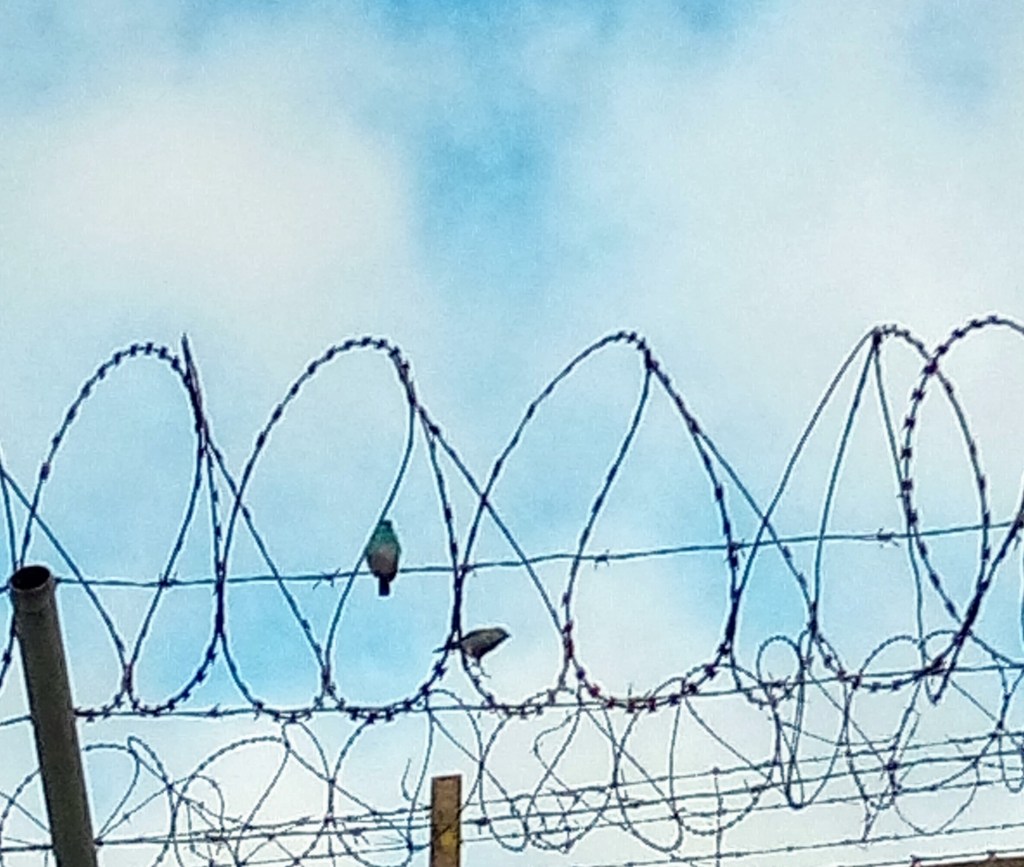
We had a typical trip to the prison this week. But, it started with a photo of a couple of little birds cooing on the razor wire. I used my cell phone, so the picture quality isn’t too good. For the last week or so, we wait in our truck until our escort, a guard at the prison named Prince, arrives to take us to the reformatory school. Before, we simply walked up to the gate and asked the various guards we encountered if it was okay to proceed and, not knowing any better, they sent us on. Prince is becoming a good friend. We went to his church on Sunday, where we ended up sitting on the platform, facing the congregation, along with other dignitaries. I don’t know if this will continue if we choose to attend there more regularly. There were only three choirs that morning singing two songs each, so nothing unusual.

Our trip through the prison involves entering the first gate and crossing through a vehicle compound. We are almost always greeted with a “good morning” and “how are you”, to which the answer is “fine and how are you?” Sometimes we are challenged with these same greetings in Chichewa, but most have learned that we are a lost cause. Sometimes there are inmates in this outer compound, waiting to go out on a work detail. They carry out garbage, cut grass and tend some maize fields in the immediate area of the prison. The inmates can also be washing the prison vehicles. There is a decrepit sports car in this area that has no purpose I can see.

Once we cross this compound, we go through the visitors’ waiting area. There are often 20 and as many as 30 people anxiously awaiting their turn to see their friend or family member. Especially with Prince, we immediately go through the next gates into the prison itself. More greetings and everyone, both guards and prisoners, seem happy to see us. Today we are supposed to meet with the officer in charge, but we have been scheduled to meet him on a few occasions already and it has yet to happen. I wonder if he exists. It is here that we walk by his office, door closed.

Through another gate and we enter the reformatory school. We are expected at 830 am and typically we are a few minutes early. Once again, we are greeted with standard greetings. Prince and one of the inmate teachers often give us another couple of Chichewa sentences to learn. Last time it was “kwanu muli bwanji?,” reply: “kwatu kuti bwino.” Or “How is your home?” and “Home is fine.” Home is where we are staying in Malawi, not Woodstock, Ontario. We review this and “ukupita kuti?”, “where are you going?”, which I can understand if you say it with a strong enough Canadian accent.

We surrender our cell phones to Prince, who returns them when we leave. He told me once that if someone stole his 5,000 kwatcha cell phone, they could end up in this prison for 2 years. Nora and I carry smart phones that we paid the equivalent of 50,000 to 100,000 kwatcha apiece. If the judge prorates sentences based on the selling price of the item stolen, the term for stealing our phones is frightening.

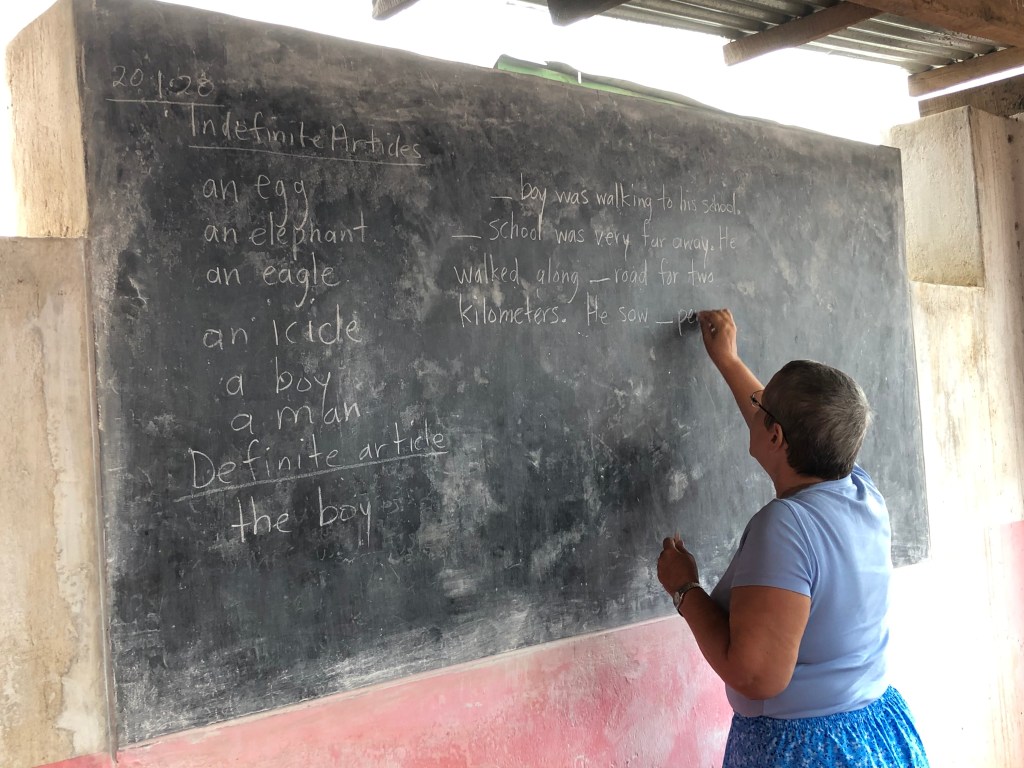
From our arrival until 1130, we wait in the library for our chance to teach. There are about 30 teachers in the school, Nora and I the only Canadians. Of the thirty, about half are government-qualified. Nora and I and one Malawian teacher are the only outsiders. The inmates spend little time in the library where we await instructions. They dash in to get chalk and then head to their classes. When the time comes for us to teach, the headmaster comes to us and asks if we are ready, and then ushers us to the assigned class. Meanwhile, I read novels from the library. I’ve read a Ngaio Marsh, an Anne Tyler, and I’ve started a Susan Isaacs. So far, I haven’t read the 1970 tax code or the Scarsdale Diet, nor Sponge Bob, but there is lots of variety.

I don’t ask what anyone was found guilty of to end up in prison: teacher, student or head master. I remember school being enough of a prison without the walls and the barbed wire. One of the teachers, he teaches Macbeth with Nora, is always bright and cheery and his English is excellent. He is awaiting a ruling on his appeal. Its been a few weeks now and the news today is he needs to wait another two weeks for a decision. During our three hours at the prison, Nora and I each get at least one class to teach. Today, I am handed the Form 2 mathematics text and told to teach whatever I am comfortable with. In this case, the one and only student is pretty weak, so I review some basic algebra with him. While he is working on a problem, I notice a couple of young white women go into the primary school. Various inmates take note also and then go about their business. White people look funny here in Malawi, I can understand that they attract a little attention. In Bangladesh, Nora and I could attract and hold the attention of entire villages without breaking into song or magic acts. Here in the prison and elsewhere in Africa, everyone has something better to do and the great white novelty quickly passes. After my class, I meet the two women. They are studying primary education in Switzerland. They are staying in Zomba, so we are unlikely to see them again. One of the guards talks with them about the prison school and mentions that he hopes Nora and I stay longer than the planned November leave date. I guess if world travel is cancelled due to the Corona virus, perhaps we will. We are enjoying every minute, but we will need to go home.

By ten am, we learn that the meeting with the officer in charge has been cancelled. We will meet with him on Friday instead. Prince tells us that we should not be worried about meeting with him, he just wants to talk with us and make contact. He is obviously a busy man and we will want to make a good impression.

It’s soon 11 am and Nora is teaching her last class, while I talk with Prince and the head master. The rain starts and although it’s heavy, the gentle sound of the rain is pleasant to the ear. It’s not a deluge like it was a couple of weeks ago, but we will wait for it to let up before making our way back to our truck. Nora ends her class and joins us in the library. She changes the mood by telling us that the sound of the rain on the corrugated steel roof of her classroom made it impossible to make herself understood. We all had a good laugh at Nora’s expense. And then, her sandal broke so we will need to go shopping. Nora will limp all the way through the prison to the truck and then through the shopping mall to the Bata store, to find a good pair of sandals.

So ended our morning.

Health

On Thursday, South Africa announced its first case of the deadly virus. That’s getting awfully close to us. When I returned from my medical appointment in Johannesburg, the Malawi authorities asked me to wash my hands and they used a temperature gauge to take the temperature of my forehead. I’m not too sure what would happen if Malawi started getting cases. The country is likely not very well equipped to deal with an epidemic. I think for one thing, the prison staff would tell us not to come to prison any more. If it gets into the prison, it will be a tragedy, considering the overcrowding there. The city of Blantyre could become a crisis centre as well. I heard that a few Asians here are wearing masks in public, but I haven’t seen this myself.

https://malawi24.com/2020/02/12/malawi-ready-for-coronavirus-minister-of-health/

With the prevalence of food insecurity in Malawi, and the associated poor health of the population, the virus would be hard to contain.

It’s time to tell our travel health insurance story.

When Nora and I made plans for holidays in southern Africa, we were careful to have travel insurance to cover us whatever happened. We were able to visit Malawi in mid November, then we headed on a tour of South Africa, Namibia, Botswana, and Zimbabwe, covering around 6 weeks. We made it complicated because we would begin working in Malawi in January and our vacationing was supposed to end on the 6th of January. The church kindly took up our travel insurance starting January 1, and we used travel insurance from Nora’s retired teachers organisation until December 31. We even had some overlapping travel insurance with our TD Visa credit card, but this lapsed in mid December and because of the redundancy, we saw no need to extend it for an extra month.

We had a great time in Malawi, getting used to the location, applying for our employment visa, meeting some of our associates and even visiting the prison school where we would end up working. Then, we went to our tour of southern African countries. We had no idea that these countries were so interesting. All these countries seemed very dry, but fascinating in so many ways. And great photo opportunities, too.

Then on December 30 and 31, as we travelled in Botswana looking at all the elephants, I started to notice that my right eye was starting to cloud over. The symptoms were just like the torn retina on my left eye from 12 and a half months before. Although I remember the doctors from 2018 saying that if this happens again, I need to get to a doctor fast, I wondered how this would work in the middle of Botswana on New Years Eve. Do they have retina surgery here? If I have symptoms on December 31, is my condition pre-existing for the new insurance starting on January 1 (and therefore not covered)? Would the old insurance cover me because I developed symptoms during their coverage period? I spent a few hours in Maun, Botswana with Nora and the tour guide trying to find a doctor to tell us what to do. The medical profession was taking New Years Eve off in anticipation of the holiday. It wasn’t until dinner time that our tour guide was able to find a doctor to speak with me by phone. My phone didn’t work, even though I thought had set up the South African sim card to make calls while we travelled. The tour guide even let me use her phone to talk with the doctor and my insurance companies. The doctor made it clear that I needed to find an ophthalmologist and get treatment immediately. She suggested I get an emergency flight to Windhoek, Namibia at a cost of over $10,000.

So, next I called insurers. The phone connections were less than ideal, and – knock me over with a feather – they left me on hold for quite a while as the phone battery heated up. The retired teacher insurance rep quite rightly said that I wouldn’t be covered for treatment in January. So, I called the insurance that began on January 1. They told me that I was covered for anything that happens in the United States, nowhere else. Then they asked me if I could stay on the line to give them feedback on the call.

At that point we decided to take commercial flights to Johannesburg. A commercial fight to Windhoek routed us through Johannesburg anyway, so we decided to stop there. The Maun doctor kindly sent contact information for eye clinics in Joburg. Using the Maun hotel’s wifi, I booked our fights from Maun through Kisane and Gabarone (where Nora would later sprain her ankle), to Johannesburg, then booked a hotel near one of the eye clinics. On January 1, we managed to find a Batswana taxi driver who wasn’t hung over and I showered him with all my Botswana Pula (about US$25) as we entered the airport. In Johannesburg, with me half blind and Nora limping, we found our way to our hotel where the staff efficiently contacted the eye clinic and we made an appointment for the next morning, January 2nd.

This is about insurance. In a couple of days, after the operation and after we had figured out I’d need to stay in Johannesburg for about 3 weeks, and after we had paid for the doctor, hospital, and anesthetist, we learned that the retired teachers insurance would pay for the medical care, even reimbursing us for some of the cancelled holiday in Botswana and Namibia. This was quite a relief and I started gathering receipts. After a day or so of euphoria, we learned that the retired teachers insurance would not in fact cover us for any care after December 31.

All was not lost. In the meanwhile, we had found out that our US-only insurance actually did cover us for care this year in Africa. In fact, they should have taken over when I called them on December 31st and airlifted me to an eye hospital of their choosing and arranged all the care. But maybe it was now all lost, since Nora and I had made all the arrangements, and their fine print said they had no obligation to cover me at all unless they did all the arranging. Well played.

My recovery has been rapid. The doctor said he was pleased with the results and I should expect my vision to keep on improving for the next few months. Just what the various eye doctors said in Canada about the left eye last year.

A couple of days before I returned to Johannesburg for the final appointment with the South African ophthalmologist, the insurance company assured me that they would cover the eye care, including the one return appointment. So, when the paperwork clears, I should be able to afford my tax bill, coming due perhaps at the same time as the reimbursement cheque.

And Nora’s sprained ankle healed after a few days without medical intervention.

Anti Climax in Africa

I have been a little remiss this week and slow to think of what to write. The trip to and from Johannesburg was uneventful, but still wearying and took time from the usual schedule. The school was very nice about letting me have Friday off. In fact, when I returned today, Monday the 2nd, they gave me an all-new class to teach, Form 2 Mathematics. The head master asked me a couple of weeks ago if I would teach this class, and I said sure, give me a book to teach from (what’s the curriculum, at least!) and he seemed surprised that I would need something like that. Today he handed me a Form 2 text book and told me to teach whatever I felt comfortable with. I started into Unit 2: (a+b)2, (a-b)2, and (a+b)(a-b). On Wednesday, if I do this same class again, I’ll get into quadratic equations of more flavours.

The trip to the ophthalmologist was an anti-climax. The high point of all the eye problems was the appointment in mid January when he told me all was well. This time, he said pretty much the same thing, that my sight is progressing as expected. He also said the same thing my optometrist in Canada said last year, that I was lucky. I guess to catch the problem early as well as to recover well. God has been good to me. If circumstances were only a little different, I’d now be blind in at least one eye. And, after gathering all those receipts and corresponding with the insurance company, I think they are getting prepared to pay us back for the emergency operation. I need to put that entire story together some time.

I’ve been reminded again on returning here to Malawi that we are well situated. The people are overwhelmingly good to us. One of the guards at the prison is a third-clerk of session. Yes, each church here seems to have two backup clerks. I had a good chat with him this morning in the sun, between classes.

On the downside, the prison system is really not good. For instance, some mornings the prisoners’ breakfast is late and once the class left half way through a lesson when breakfast was finally ready. And, they nicely asked to leave, aware that I didn’t understand the Chichewa announcement. I asked our guard friend about a prisoner I noticed who had only one arm. Apparently he was caught stealing and experienced some vigilante justice before finding his way into the prison system. I have written about a young man getting a 2 year sentence for stealing a bicycle (worth $100 at most). You can get a similar sentence for stealing a $10 cell phone. No wonder the prisons are overcrowded. My form 3 chemistry student is in for 11 years – I wonder what he did but I have not asked.

Last week I was getting ready to try an experiment with my chemistry classes. When I asked about some details, I was told that I couldn’t use the lab with my students. Today I learned that the lab is only used for final exams. How would that work?

I hope my readers are enjoying these little tidbits of our life here. The time will run out very soon – it’s already March. Feel free to make any comments. They are all appreciated. I’ll try to answer any questions you may have, or you can tell me all about the snow back home.

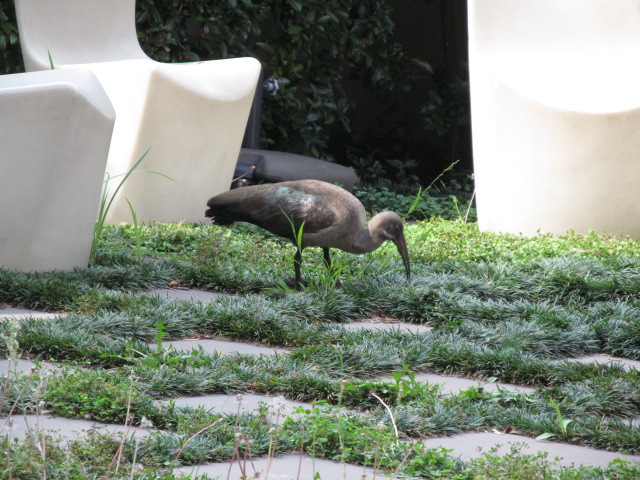
A bird next to the pool at the hotel in Johannesburb in January
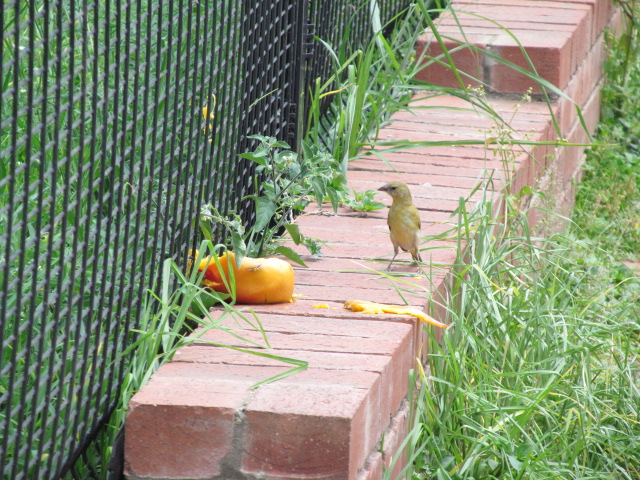
Another bird I saw on one of my walks in JBurg in January
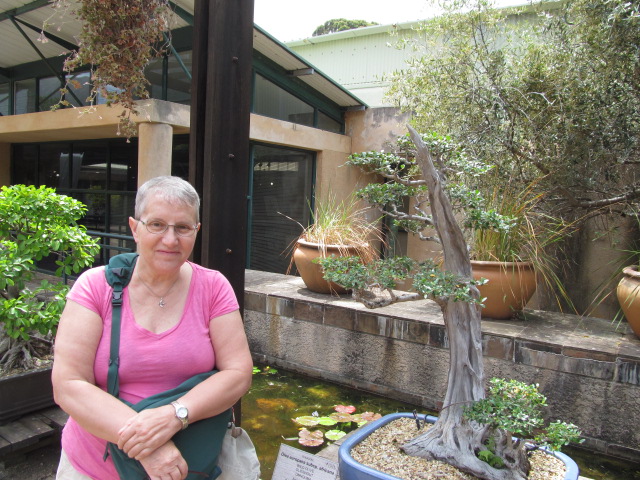
Nora in Cape Town in December

The streets of Blantyre are a little less safe today

Yes, it’s true. I got behind the wheel of our SUV for the first time. It’s really the church’s SUV, but the ownership is in my name. Getting me on the road involved many trips to the licensing bureau. To transfer ownership, all the former owner had to do was show his fingerprint and present the ownership document. I had to press that fingerprint pad about a dozen times in order to pay the various taxes and get little round decals printed for me. On Friday February 21 (A date to conjure with: ekusha February, the Language Martyrs’ Day in Bangladesh), I was legal for the road. I didn’t drive anywhere until today, Sunday, though.

This is the largest vehicle I have ever driven! It is a 1996 Toyota Surf, which is the right hand drive version of the Rav4. I’ve often wondered why these behemoths are legal on the road and now I have confirmed first hand they should not be allowed on the street and especially in parking lots. I am more of a 2-seater person and also enjoy a good bicycle ride.

This week, Arnwar, our mechanic, and his crew spent many hours cleaning the inside and outside. I had the novel experience of visiting a weld shop where they worked loose a bolt that was rusted into place. The three experts stuck their noses into the engine while the brazing rod poked away at the bolt. For grounding, the shop has a 4 m long metal pole that they move around from place to place. Safety first, though: we made sure no one was hit in the head when the pole was swung around onto the frame of the SUV. I was the only one around to have glasses (my prescription pair) and I stayed well back from the sparks. I guess it was too warm for gloves or safety boots.

Tomorrow Nora and I will climb up into the beast and drive to school, unaided for the first time. Nora might need a boost up, but I can do that. It’s big enough, I can get a small step ladder for her and keep it in the “trunk”. Do they call the back storage area a trunk?

Our drive today was to Limbe CCAP church. You can google the town of Limbe, a sister-city or maybe a suburb of Blantyre. Attached is a song from one of the three choirs that sang. I hope you can listen to it – it’s in my cell phone’s format. Churches here have music like this most Sundays. Usually the choirs dance to the music, as they did today.

Come to Jesus Choir, Limbe Feb 23, 2020

I am continuing to learn about the language barrier at school. Although I teach in English, the students don’t always understand what I say. I asked the Form 1 chemistry class if they wanted more time to complete their test or if they wanted to go to the next unit. I was assured that we should move on, but when I tried to collect the completed tests at the end of the class, only one student had actually understood that he needed to complete the test and hand it in. Oops. I might get him to translate critical instructions from me to the class in the future.

This week I might try some actual lab experiments. I merely described the fabrication of ammonia and nitric acid. That sounded dangerous (safety glasses? Gloves? Shoes?) and probably impossible with the materials available. My Form 3 student wants me to go back one unit in the curriculum, so maybe we can handle boiling water. Oddly enough, the barometric pressure here is pretty close to a standard atmosphere, so I can’t demonstrate water boiling at other than 100°C. We do have some non-potable water at the prison, though, so we’ll see what it boils at. And we can add salt to some distilled water. I found some copper sulphate, and if I also find some copper wire, maybe I can try some electroplating.

I’ll only be able to teach two days this week, instead of thrice. (“Thrice”? No wonder no one knows what I’m talking about!) I will return to Johannesburg on Thursday for my ophthalmologist to examine my eye on Friday. This should close out everything with him. My right eye is behaving like the left did last year, so I anticipate no remaining issues. The next job is to try extracting money from the travel insurance people. That’s a long story in itself, which I hope to bore you with when it’s all over.

We had three visitors from Canada this week. For the next week or so, they will travel the country looking at Presbyterian World Service and Development projects with an officer from the Canadian Government. Their visit reminds me of my first visit here in 2016. Warning: you’ll want to come back.

Happy St. Valentines

Our cultural experience this past week was attending a 5 hour church service in Chichewa. It was an induction service for a new minister. The first 2 or 3 hours were not too bad, with lots of music and dancing. I figured out the scripture passage from Ezekiel, so I know what the sermon was about. The last two hours rather dragged on for us. Everyone else was enthusiastic, however, about welcoming the newly induced minister. Various groups got up and danced forward with money and gifts for him, which got a little repetitive by group number 20. They even made the three Canadians dance and shower him with money (group 18, I think). So, we’ll stick with English speaking services for the foreseeable. The local accented English is hard enough to understand, but we are getting better (especially Nora). Is it worth mentioning that Malawians probably have trouble with our accent?

Our teaching continues. Nora and I rarely teach all six classes in any day, but so far we have always been able to teach one class each as a minimum. We were asked to come good and early (7:40) to school this week, but on Friday, they didn’t have classes until after 8 am. In the coming week, we will go in at 8:30, per new instructions, so we don’t wait around so much. I’ve read a book on contract bridge and now I’m in a novel by Ngaio Marsh.

The two chemistry classes (Form 3, or grade 11 and Form 1, or grade 9) reached some milestones this week. The Form 1 class is now fully conversant on the mysteries of atoms, from unit 4 of their text. They’ve now seen many examples of weighted averages so I expect half to be able to work an example on the test on Monday.

Form 3 on the other hand had their Nitrogen test this week, from the first part of unit 2. I only have one student, although up to four more could show up to class. He asks intelligent questions, but didn’t do very well in the test. As I took up the test, he told me that he wasn’t taught the previous unit, so floundered on questions related to earlier work. He also doesn’t seem to be aware of the material we know so well over in Form 1. This week I will back up and we’ll talk about unit 1 before moving on with Sulphur and Phosphorous.

I’ll mention the Form 1 math class (algebra). We are a few pages away from the end of a unit (a week of classes). I have given them a couple of quizzes and they have had some trouble. It took time for them to understand variables and constants. I think it helped when I looked up the Chichewa words: kosintha and zonse. We seem to be having a good time, with a running joke about my poor Chichewa. Although this was never a strong point in school, here I can show off with my mental arithmetic while they fumble with the calculator. After enough worked examples, they seem to absorb some of the material. Patience is a virtue, and so is being able to multiply 2 and 3. There is a sign over the headmaster’s door, “Chichiri Reformatory School” to remind me that circumstances have held these young men back from achievement.

We are getting closer to buying our own car. Well, the church is buying a truck for us. I got a permit on Tuesday that allows me to own a vehicle and we found a truck for sale. Our reliable mechanic (like Mr JLB Matekoni from the Ladies No. 1 Detective Agency) found it and decided it was in good enough shape to buy. It shouldn’t take too much time for the money to be transferred to us and after a few repairs and a reel of red tape, we should be ready to go (vroom). I’m hoping in a week and then we’ll be able to go to school and elsewhere without begging rides. The traffic isn’t really that bad compared to Eglinton Ave in Toronto, although in Blantyre they have a tendency to go clockwise around round-a-bouts. Nora says it’s something to do with the Coriolis force.

This week I had quite the time getting our personal money transferred to our shiny new bank account in Malawi. I tried doing foreign transfers on line, but this can be expensive, impossible, or both. Some of the bank transfer features don’t even recognise Malawi. And they do like to lock one out of one’s account. Not to be outdone, the TD decided the safest way to keep money in our account was to shred the power of attorney we set up. Cyrille was able to send us money anyway, and we were able to e transfer money back to him. I’ll have to move our business to a more reliable bank when we get home! The good news is that we are now millionaires in Malawi kwacha (540 to the dollar).

Lost without Google Maps

It seems like every time we left the house, we needed Google to get there and back. Monday and Tuesday, we stayed in. We were given the impression that the streets would be full of protests over the release of the judgement over last year’s election. In fact, the judgement was not released until Tuesday afternoon, so the protests would have been premature. And then, the judgements were received with a shrug. It does mean that there should be another election some time this year, which could very well be upset by violence. It looks like not before October, so we might be gone by election time.

But, back to Google. Blair took us to the immigration office on Thursday to get our passports stamped with our official Temporary Employment Permits (TEP) and then to a bank to open an account. Some funds will be transferred soon and then we’ll have easier access to local currency. We had to cough up US$1000 for the TEPs, so we might need some ready cash soon. I was glad to be able to trace our way around downtown Blantyre on my phone, so I should be able to get back when I need to. The bank said they will phone us this coming week when our cheques are printed and ready to pick up. In another week or two our debit cards should be ready, too.

We keep on making comparisons to our time in Bangladesh, 30 years ago. Blantyre has less than 1,000,000 souls and it’s less than 200 years old, while Dhaka was at least 10 times as large and 10 times as old. I never had a good map of Dhaka to help me get around and I was always a little uncertain about where I was and how to get anywhere. With the help of my smartphone, I think I can figure out where I want to go in Blantyre city.

Speaking of which, Nora and I badly needed hair cuts, so we got some detailed instructions to a barber shop and hailed a minibus. The bus is made for probably 12 people and we had little problem fitting 16 in. (In Bangladesh, they used 40-person buses and filled them with 80 and added more on top.) For one Canadian dollar, we were dropped off at the Blantyre market and made our way on foot to the barber shop at “the mall”. You really need to know where it is, or you’ll miss it. $15 later and we were both trimmed up nicely. Pulling out the phone, we found our way back to the “bus station” and hopped on the return bus. Coincidentally, as we left the station, I noted that we passed our new bank, and so discovered inadvertently how to get back to it! Another $1 and 15 minutes later we were home.

Also on Thursday, our friend Hamilton took us to look at where the Ndirende club is planning to build its community centre. You may want to check the blog from Nov 30 where I mentioned the club. It currently is a nice field of maize, with a few banana plants along one edge. The location is beyond where Google shows roads, so I might not be able to find my way back without help. Since I will probably be taken there again by Hamilton, palibe vuto, or not a problem. I do think I could make my way back there if I had to, but in no time, I will forget.

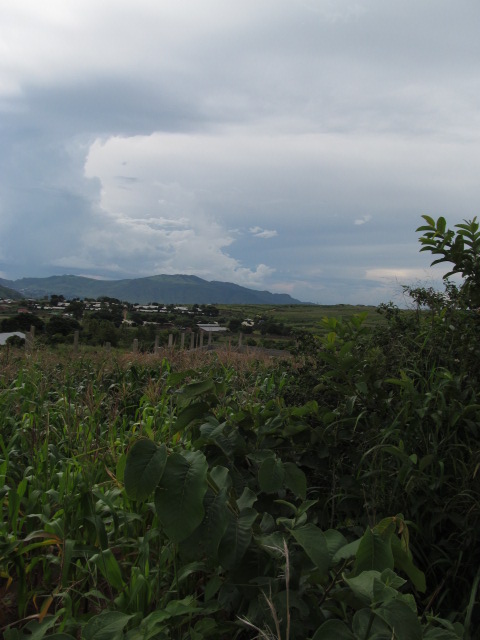
Ndirande future home, showing a church in the background, under construction.

On Friday, the school headmaster asked us to come at 7:40 instead of the 8 am that we had been trying for. Rammy, bless his heart, was late (almost 9 am) on both Wednesday and Friday due to car troubles. Our shortened day meant that we didn’t have time to teach all three of our classes each. This week will have this and other new adventures, no doubt. Time for another phrase: Tionana pepani, which means see you again soon, or sorry, I’m late – not sure which.

Nora in the Form 1 classroom.

If you want to check on Google Maps, you should be able to find St Michaels and all the Angels church in Blantyre, which is near where we live. Between there and the Phoenix International Primary School to the northeast. Blantyre Market should be another searchable location, near the Bus Station. The bank is not shown, but it’s near La Caverna, the oldest 2-storey building in Blantyre. The Ndirende club meets at the Holy Ghost Catholic Church and its new digs will be further north, on a road that is not shown on Google Maps.

Groundhog day in Blantyre

Groundhog day doesn’t mean much here, only in part because there are no groundhogs. We will gladly take another 6 weeks of this weather. Although it has occasionally been very wet, it is also a comfortable temperature. I think it has ranged from 20°C to 28°C for a few weeks now.

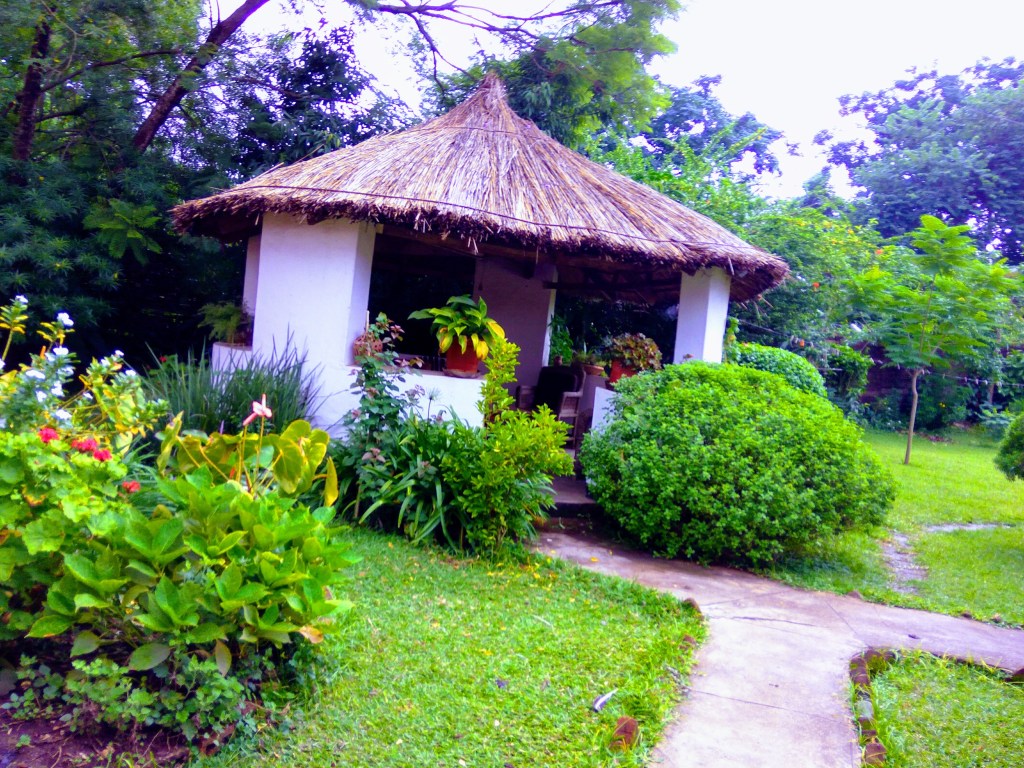
Our Gazebo

On our day off this week, we asked Rammy and Lyca to take us to another prison so we could have another experience. We started the day at Chichiri, taking part in Bible studies: Nora went to the women’s and I went to the men’s, naturally. The men’s study opened and closed with singing and prayer. Rammy talked for about an hour about sin and repentance. He referred to passages from a dozen books of the Bible, literally from Genesis to Revelation.

Over the following hours, we got on a series of buses (minivans) which took us to Mulanji. At that prison, Nora and Lyca took part in another Bible study with the women’s inmates while Rammy and I talked with Mathias (not his real name) who was due to be released the next day. Although I couldn’t understand any more than 5 words in Chichiri, Rammy encouraged Mathias in his hope to live a Christian life, despite the hardships that are sure to greet him when he gets home. There is a good chance that his friends and family will ostracize him for being a former prisoner / criminal. Mathias had stolen a bicycle in 2018 (or late 2017) and received a 2 year sentence. Even when I had a bicycle stolen from my 15 year old self, I would have thought 2 years an overly harsh sentence.

School progresses. I am working through Chemistry and Mathematics with Form 1. Many of the students seem to be catching on, while one or two have trouble grasping the concepts. I will need to go through weighted averages of isotopes a couple more times. Chemistry 3 students are more casual about attendance. At the first class, I had at least 12 students, but it has dwindled to 4. I think they were hoping I could do some chemistry experiments, which will not be easy with the available equipment.

Speaking of chemistry experiments, I am becoming familiar with our stove. I’ve managed to make scones and banana loaf, both edible and inedible. Over the next three or four non-working days, I will try some bread, if I can find some yeast in the store.

On Monday (Feb 3), the court will bring down its ruling on the charges of election fraud. I doubt that anyone will get 2 years in prison. We (everyone living in Blantyre) have been told to stay at home that day and maybe Tuesday, too. Normally, Monday is a regular teaching day for us. Regardless of the ruling, about half the population will be upset. Coincidentally, Blair Bertrand, our host and mentor here in Malawi, is scheduled to fly into the capital city on Monday, and was planning to drive the four hours home to Blantyre. I wonder what he will do, or if the flight itself will be cancelled.

My eye is improving, as expected. I can amuse myself by squinting at straight things with the bad eye. Everything straight is crooked. When I read some print, italics are straight and straight printing is in italics. This is how my left eye behaved last year. I booked my return visit to the doctor in Johannesburg. He expects me on Feb 28, 8 weeks from the date of the operation. By then I expect my sight to be improved.

Design a site like this with WordPress.com
Get started