First Blog. Ha, I wonder if anyone will bother to read this. I don’t think blogs will ever catch on. When I set this one up, the hosting site wanted me to buy the premium version. One reason for paying for this is I’ll make more money. Well, don’t send me any money. If you want to support the work we’ll be doing, please support the Presbyterian Church in Canada.
Nora and I have been getting ready for a year or so. Since mid September, we moved to Toronto – East York – as an interim step on our way to Malawi. In Toronto, we’ve been filling in time, mostly. We’ve walked around the neighbourhood to get some exercise. We’re trying to eat our way through our groceries so we don’t have too much left over to throw away. Our chief concern while in Woodstock was packing the right things to take with us and conversely, the right things to leave behind.
A highlight so far this fall was our trip to London on the Thanksgiving weekend. We visited Nora’s surgeon who pronounced Nora fit to travel. Her brain surgery was a complete success, as far as the surgeon could tell and she can engage in any activity she likes. We also visited with Nora’s sister and we were able to drop our car off in storage in Woodstock. Now we can look out of our window and see the traffic snarled along Eglinton Avenue and practice saying Schadenfreude. (Nora’s pronounciation is pretty good). I dream now about buying cars and having to get a car repaired, but it feels pretty good to wake up.
We are also studying some Chichewa, the most common local language in Malawi. We are following an APP that gives us a bunch of words each day to memorise. We also have an ebook that takes us through some useful phrases. I’m at 575 words, about. We’ll find out if I can come up with these words when needed.
Well, that was entry one. I still don’t think blogs will catch on. But, I thought that a lot of things wouldn’t catch on: SUVs, conservative politics, CB radios, lotteries, on line gambling, selfies, pet rocks, poutine, … Next I should talk about what Nora and I will be doing in Malawi. Or maybe I can write about our holiday in South Africa, Namibia, Botswana, and Zimbabwe in the weeks leading up to the beginning of our assignment.
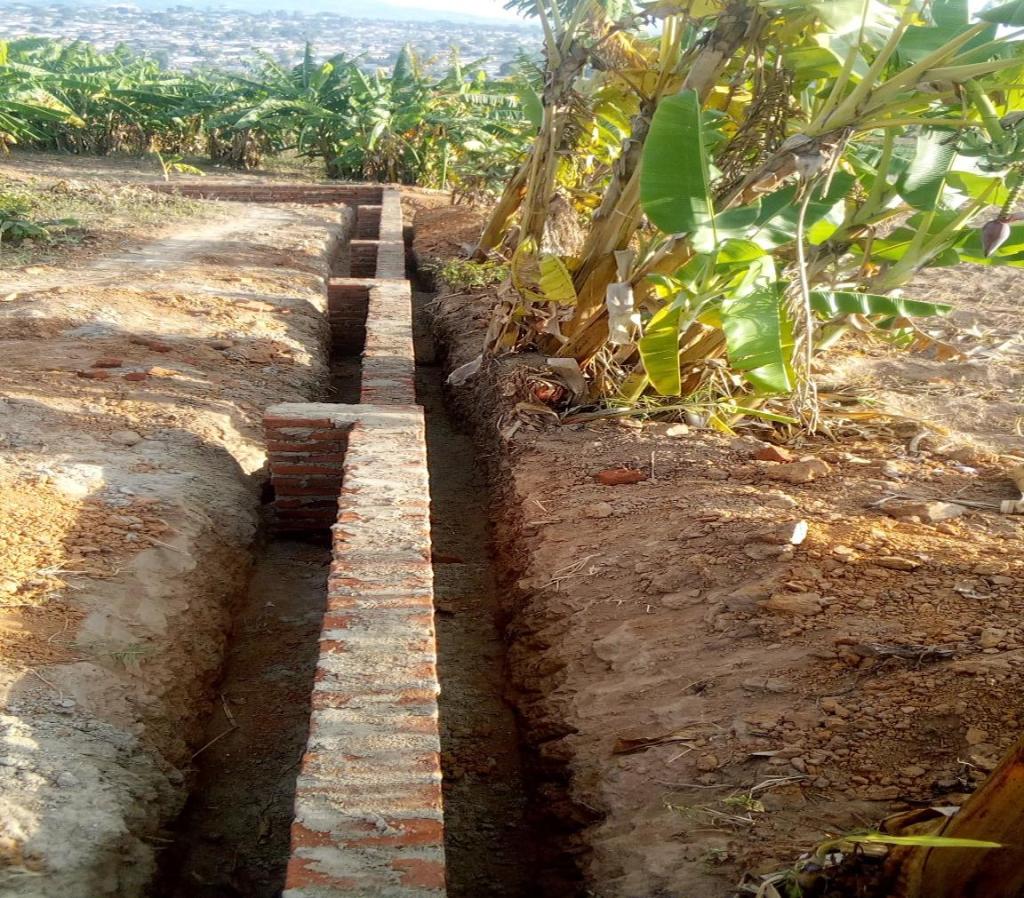
Some of my readers helped with this wall, so I want to share some of the photos I got from Malawi this week. Here’s the first one, from the spring, when they were digging the foundation.
Foundation of one section of the wall.
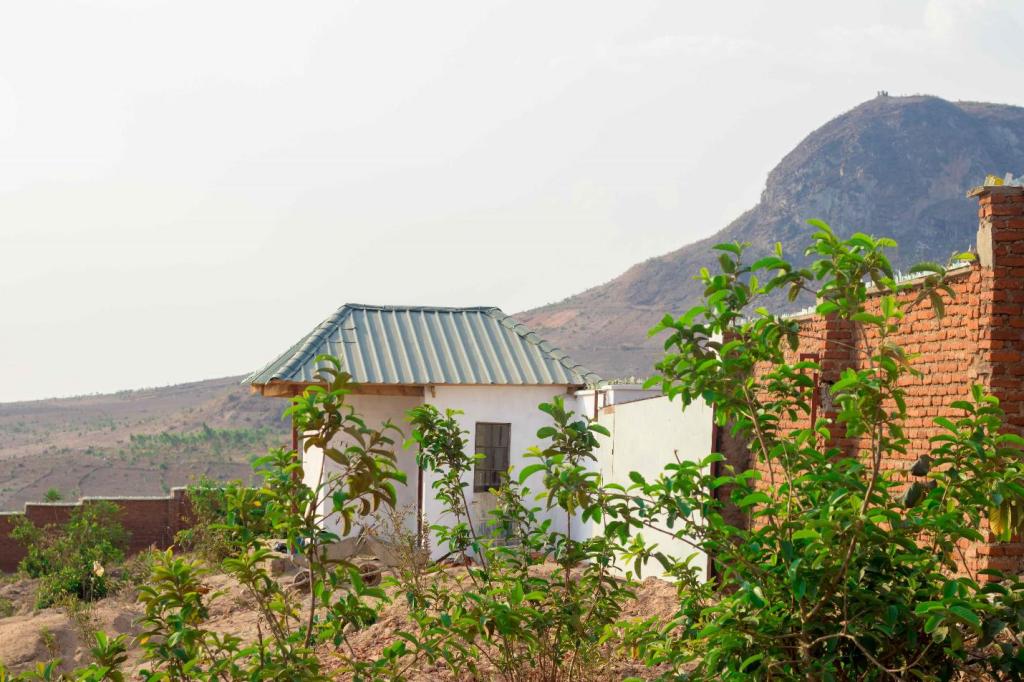
And here it is, pretty much complete, starting with the guard house, inside the wall. More buildings are coming, when financing is available. Hamilton thought he might get some money from friends he has in US. Hamilton also raises money with his woodworking. If you were visiting Blantyre with the Presbyterian Church, you’d probably have an opportunity to see his work. We have a couple of things from him, but with our hasty exit, we didn’t collect as much as we might have.
Guard House
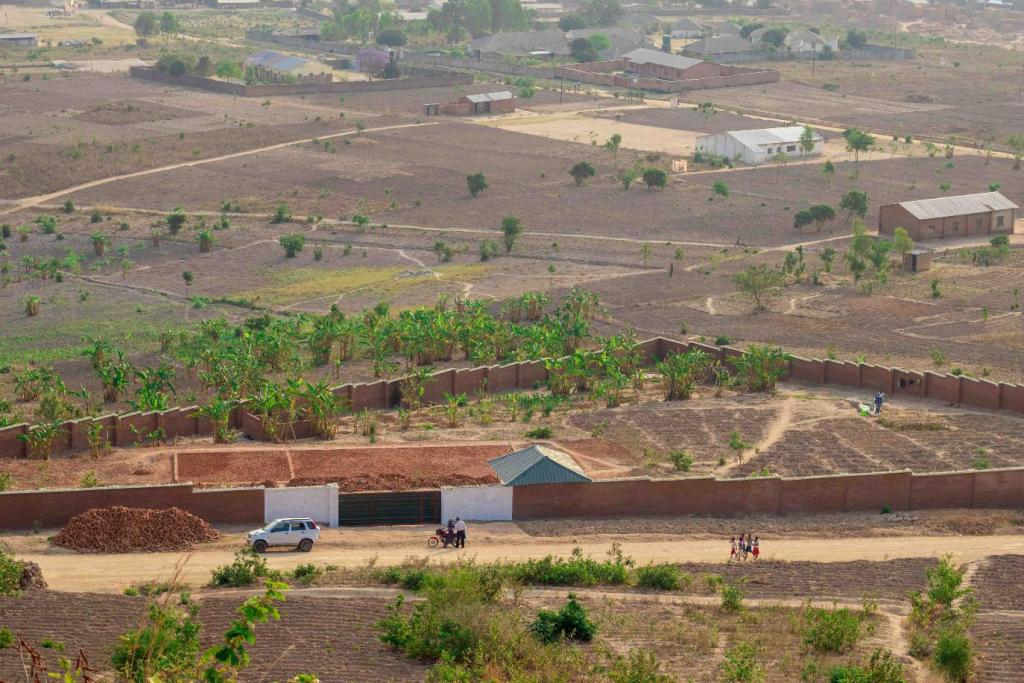
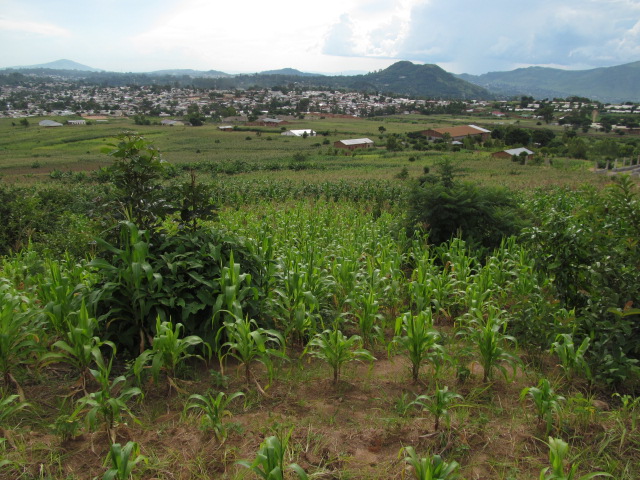
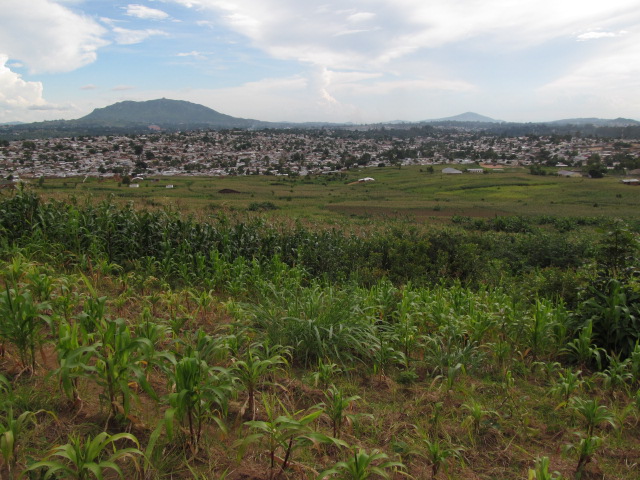
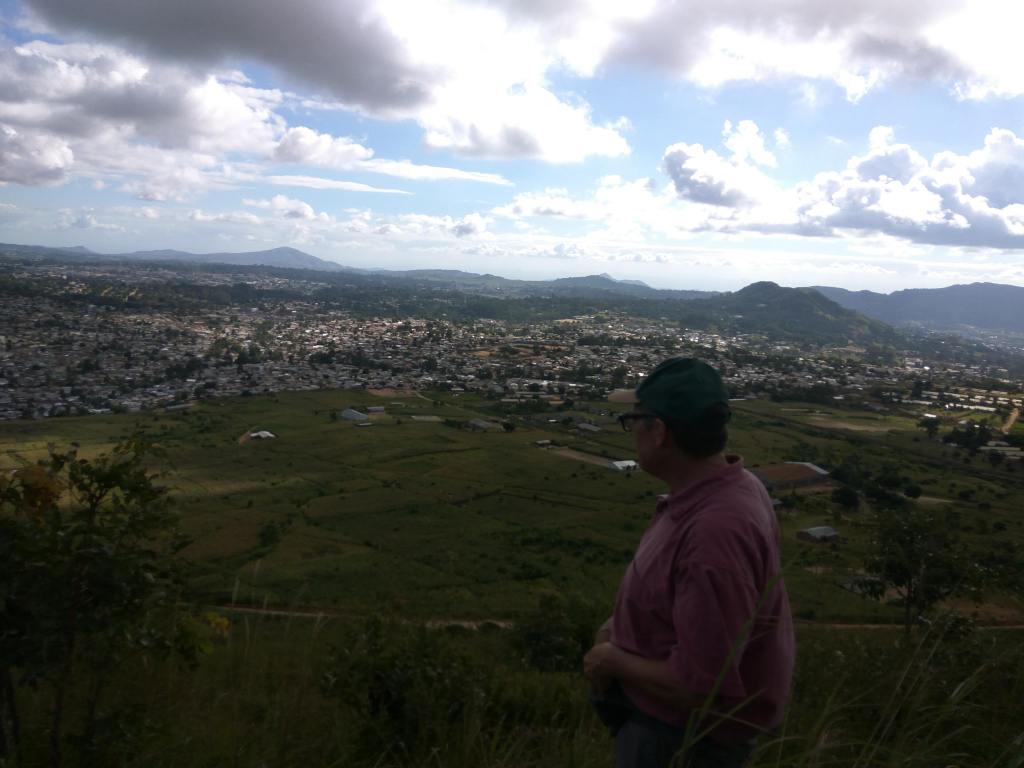
Here’s the whole compound, viewed from the hillside. Nora and I hiked along this hillside with Hamilton and his wife Violet early in the year and saw maize and bananas growing here. Ndirende is just beyond the top of the photograph, maybe to the right a little.
View from the hillside
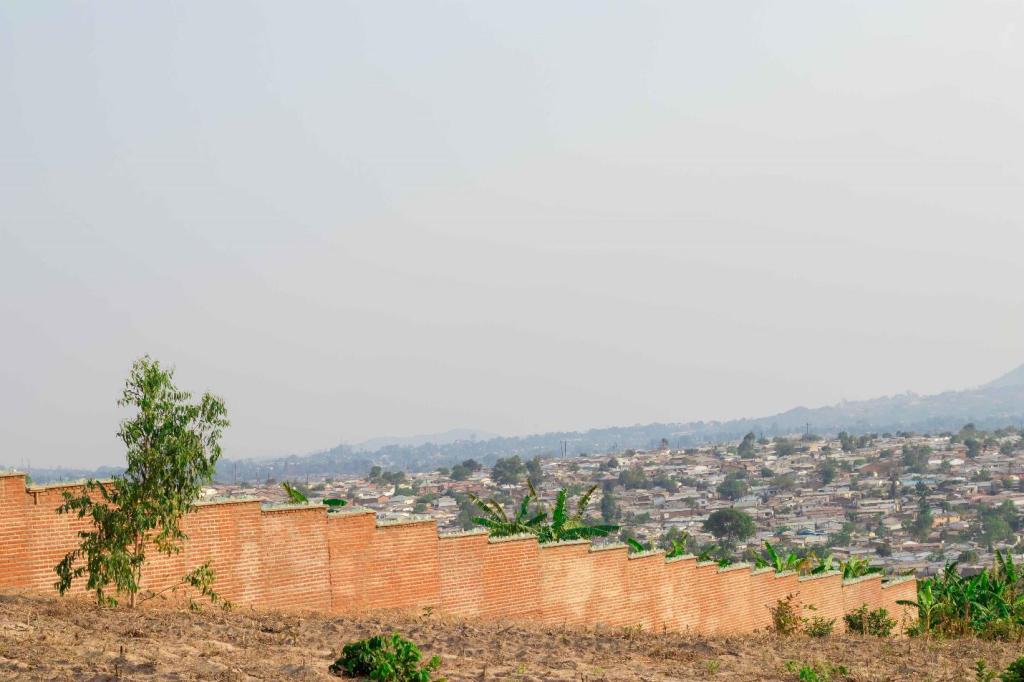
A closer shot of a completed section of the wall and you can see a big chunk of the Ndirende community. It seems to me that Nora and I lived in the hazy section of the photo, in the rightmost third of the shot.
Closer view of completed section of wall. Ndirende in near background. Blantyre city in far background.
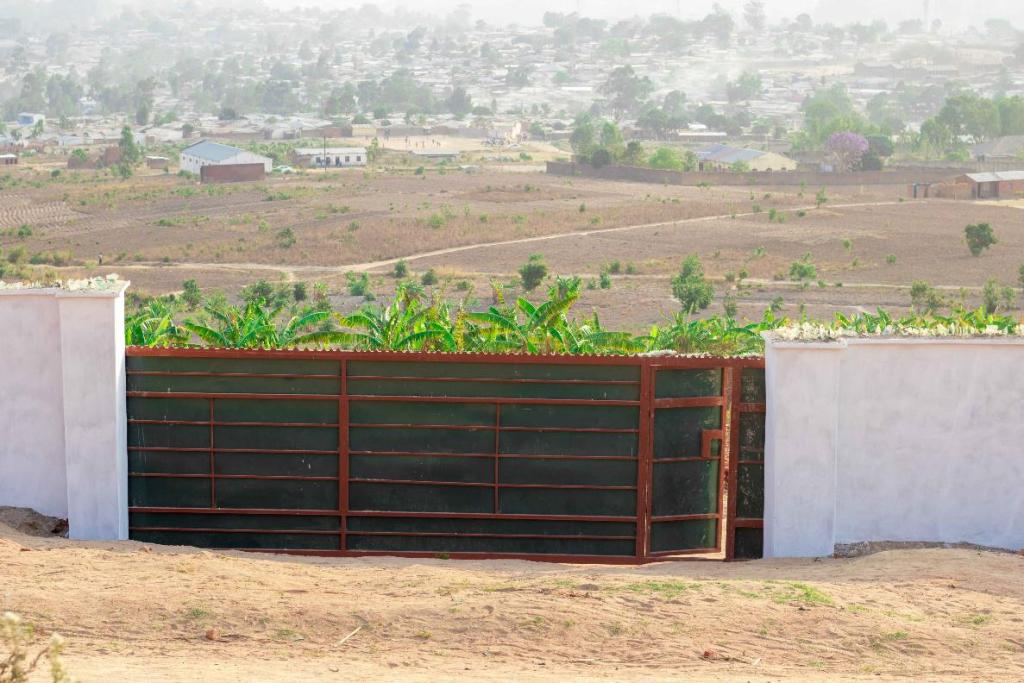
If you go to Malawi and visit the club, this will be the front gate greeting you. It will surely be decorated by then.
Main gate
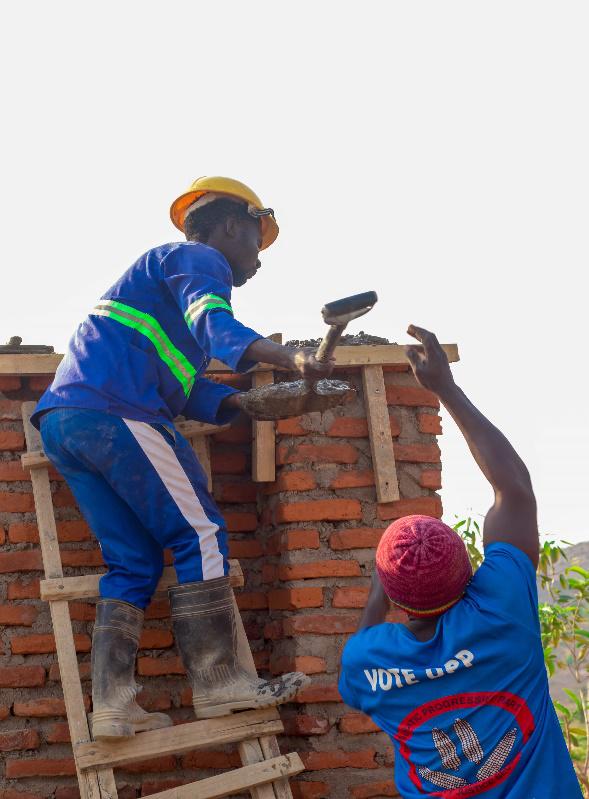
Finally, a look at the workmen. Notice the safety equipment. Ok, no safety glasses, steel toed boots, or gloves. I need to go into the attic at our church to replace some lights and our ladder is no safer than this one.
Workers completing wall cap. – Vote UPP!
I haven’t had much news about Malawi for a while. We have kept in touch with a couple of people, mostly Hamilton at the Ndirende club, Lyca of the Friends of Prisons, and Prince, a guard at the prison. According to the internet, there have been about 5,800 Covid cases and 180 deaths to date. There appears to be an increase in suicide due to the economic downturn. The Ndirende club works with disadvantaged people in the poor community, so they continue to work with many vulnerable people.
Thanks to the many of you who donated to this wall project. The wall is pretty much complete, as you can see from the video. I put the link here twice, not sure if they’ll both work.
Now that the wall is complete, I wanted to let you know, especially those who contributed. The PCC managed to scrape together some additional money from their budget (ha, probably Nora’s and my erstwhile upkeep money) to complete this. Thanks to you for your generosity, on behalf of the club.
We have settled into Woodstock and are enjoying the summer. We hardly miss being able to travel, but after all we did more than our share recently. One of the things Nora and I usually try to do in the summers is build up some muscles by biking. Nora is suffering from a bad back this year, so she hasn’t been on her bike. I, however, have managed to go about 25 km around the city.
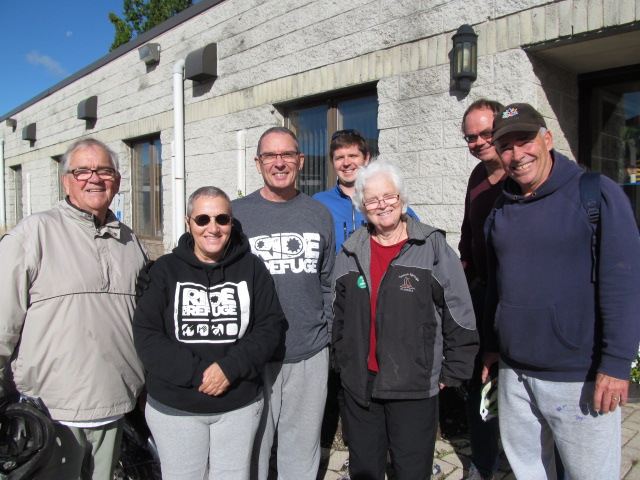
You may know that we’ve done some fundraising for PWS&D in the Ride for Refuge bike-a-thon in past years. The picture above is from 2018. I’m up for it again this year (October 3), but it sounds like Nora will not. If you can support my bike ride, you can donate here. If you got a fundraising email from me earlier, you can donate twice. https://secure.e2rm.com/registrant/FundraisingPage.aspx?registrationID=4759382&langPref=en-CA
Also, you might want to know how the money will be spent. PWS&D does food security work in several countries like Malawi, Nicaragua, and Guatemala. They’re hoping to raise $10,000 for this effort this year through the Ride for Refuge team. https://presbyterian.ca/pwsd/agriculture-and-livestock/
Climate Change, of course is a major problem for poorer countries and makes agriculture more difficult. There are ways to mitigate the effects, such as applying mulch to keep the moisture in the ground and wise plant distancing. One might call this plant-based social distancing. I was in Kenya a couple of years ago and some successful farmers who had used these mitigation techniques had corn stalks that grew 20 feet high.
There are many news items about the world crisis in food security. Like everythign else, it’s been made worse by the virus. Here’s one video I got from the Canadian Foodgrains Bank recently. The Presbyterian Church is a member of CFGB. https://www.youtube.com/watch?v=r_QFGzP245A
Lots happening in the Warm Heart of Africa. As of today, Malawi has 703 cases of Covid-19 and 11 deaths. Schools will stay closed but the football league wants to start the season again.
Yesterday was their winter solstice and there was a solar eclipse. One more thing that we missed by having to return home. On Tuesday, they will have national elections, because the courts, back in February, declared last year’s election void. I think the various parties are already claiming victory, even though election day is a few days away.
The building of Ndirande Club’s security wall was stopped for a few days while funding was worked out. They were able to return to work this week and I got some videos to show us how things are progressing. You should be able to look at these, if I got my technology right. Notice how warmly the workers are dressed. Today, Sunday the 21st, the high temperature is 17°C. It’s winter after all. And note the odd angle at the corner. The property is not a rectangle.
I want to update on the Ndirande club soon. The wall/fence is continuing to be built and I have some photos. Covid 19 cases are on the increase. These are coming, as I assemble some information. But for now, I want to share these attachments.
The first one is from our time with MCC in Bangladesh. It’s not written by me and I don’t know about copyright. It was possibly the most useful bit of information in our orientation package. Think back to when you were frantically buying up a lifetime’s supply of toilet paper. I wish I had shared this in February, but I didn’t have it on my computer there.
The next one is a short story written by Canadian comedian David Broadfoot. This one is copyrighted, but it’s worth sharing. As Mr. Broadfoot would say, I’m old enough to say what I like. I don’t know why this hasn’t been talked about for a couple of decades now. It’s prescient on the part of Mr. Broadfoot, written in the 70s or 80s, I believe.
I haven’t posted for a few weeks now. You’ll be glad to know that Nora and I have moved back to our house in Woodstock and we’re returning to “normal”, as if that could ever happen. We had to buy tomato plants this year. This week, the Canadian government returned the excess taxes they took from Nora earlier this year, so we can pay some bills. Ha. And we’re going to contribute to the Ndirande Social Club, which perhaps you can do as well.
Where it says, “Please write any appeal name or special project designation: “, please write “Ndirande”
Thank you for your support.
Nora and I worked a little with this club and it was a project we reluctantly left behind. Hamilton Banda lives in Ndirande and with a board of directors, leads the club. Hamilton has been instrumental in moving in faith to keep the club running for years. Since leaving Malawi, we have been getting news and we’re glad to report the project continues without our humble efforts.
Ndirande is a poor suburb of Blantyre. You can Google “Ndirande” and get a little more information, but some of it is pretty dated. I did drive there a couple of times from our home nearby. There’s a hole in the road about the size of my VW Golf and 2m deep, so one must be careful. The Presbyterian Church has supported the social club. I wrote about the club in earlier posts. Over the years, they met in church halls in Ndirande and they even managed to buy some land. They now own land at the edge of the community and in April of this year, they started building a security wall. They hope also to construct buildings that can be used to generate income and for their ongoing meetings. The Presbyterian Church in Canada has helped to build the wall with approximately $30,000, but that only pays for ¾ of it. In other years, the PCC also helped to rebuild some homes destroyed by flooding. So, if you have contributed to your church and local hospital during the Covid-19 crisis, now you can also contribute to Malawi through the PCC.
Where it says, “Please write any appeal name or special project designation: “, you can write “Ndirande”
Here’s an update from the project engineer, with pictures. The club is reporting regularly and we (PCC) feel confident that the money is being wisely spent.
Speaking of Covid-19, Malawi has reported about 250 cases of the virus. They have a problem now with quarantining suspect and actual cases. Quarantined individuals are escaping and thus almost certainly spreading the disease. The Ndirande slum is very high density with little chance of social distancing. The club has in the past and will continue to educate members about health and hygiene.
From the news yesterday (April 2), three people in the capital city, Lilongwe, tested positive. Some of our friends there were hopeful that the virus would not arrive, but wishful thinking is not a plan. At least one of the sick individuals had travelled recently in Asia and in turn infected their household. The government has tried to stop travel from neighbouring countries, but that will be impossible. Especially when so much of their food supply is from places like South Africa.
According to the online publication, Guardian International, “In Malawi only 20 people a day can be tested for the virus, and there are just 25 intensive care unit beds and seven ventilators in the country of more than 18 million people. Since February, however, the government has been racing to curb Covid’s arrival.”
A quick addendum. We learned today that visitors are no longer allowed in the prisons until after the danger of the virus passes. We’d be taking up space if we were still there.
I won’t be surprised if you quit reading these posts. It’s time to hang up the computer mouse and move on, I guess. We are still in quarantine. It’s Monday morning and it’s been 6 of 14 days, but I’ve read that there’s a 50% chance of the symptoms starting in the first 5 days. So, in a sense we’re past the half way mark. The heir to the British throne gave up on isolation after only 7 days, but we know he’s special.
We still fill in our isolated time in the usual ways: a little cooking, some Netflix and Youtube. Nora knits – quel surprise – and I keep daubing paint on the paint-by-numbers. Tomorrow I’m going to get an image of my chemistry test via Whatsapp so I can supply an answer key. Aside from one or two of the best students, no one will know the right answers.
Two items about submarines that reflect what’s happening with us.
In Malawi, they have suspended all international border crossings starting April 1st. The announcement said that they still allowed aircraft carrying essential health equipment and emergency relief items, as well as those carrying returning residents. Our friends and colleagues the Bertrands got out of Malawi this weekend and will probably arrive today in Canada. Their 14 day quarantine is federal law, whereas ours is voluntary. It’s hard to believe that people went on holidays over March break. Nora and I have avoided going to the states for a few years now, after experiences with obnoxious border guards and the election of you-know-who. We would also similarly boycott Ontario, except that we live here.
The big news in Canada has been toilet paper. I have an article from our time in Bangladesh that I wish I could share with everyone, but it isn’t on the laptop computer we are carrying with us. Maybe in May when we get home, I’ll find it on one of our computers in storage. I’ll share this attached article from the Globe and Mail (splinters in toilet paper!). The attachment is probably not legal, as it’s copyrighted by the newspaper. Read it and destroy it. Don’t tell anyone where you got it.
OPINION
Forget toilet-paper hoarding. In the time of coronavirus, let’s seize the bidet
ADRIAN LEE
PUBLISHED in Globe and Mail. MARCH 12, 2020 UPDATED MARCH 17, 2020
A customer walks past mostly empty shelves that normally hold toilet paper and paper towels at a Costco store in Teterboro, N.J. on March 2, 2020. Photo not included.
SETH WENIG/THE ASSOCIATED PRESS
Adrian Lee is an editor in The Globe and Mail’s Opinion section.
In a land down under, the hottest-selling thing in stores is a disposable cleaning product used, well, down under.
Fears around COVID-19 – now declared a pandemic, with more than 120,000 cases diagnosed in more than 100 countries over the past three months – have prompted a manic worldwide run on toilet paper, particularly in Australia. Last week, two Sydney women were charged after a three-person brawl over TP in a grocery-store aisle. Days before, a man had to be tasered by police after allegedly choking a fellow customer and reaching for an officer’s gun in pursuit of the scarce stuff. Stores have instituted customer quotas to ensure fairness – and some supermarkets have even hired security guards specifically to enforce the roll rules.
Such shortages and limits have become common sights around the world, too. Here in Canada, our strait-laced instinct for order – even during a pandemic panic – has led us to line up for hours in Costcos and grocery stores just for the right to strip shelves of toilet paper down to their steel rivets. Occasionally, we’ll deign to spare the less fortunate a square – at mark-ups as high as $50 for a six-pack, as one B.C. man recently offered on Craigslist.
Never mind that the novel coronavirus is a respiratory illness, with few reports of associated gastrointestinal symptoms. Never mind that the supply chains for toilet paper appear sturdy, despite online hoaxes around production shortages. Never mind that neither Canada’s Health Minister nor Chief Public Health Officer mentioned toilet paper among the suggested supplies to stock up on, in case of the potential of a two-week quarantine. No: The coronavirus is here, and despite the eminently human and reasonable anxieties we have around the pandemic, one of the main fears is how will we wipe our butts.
This baseless hoarding is just the paper-thin surface problem, however. The focus on toilet paper as a must-have has exposed a broader tissue issue: A centuries-long drought of innovation around how we use our toilets.
Consider this: It was 1596 when Sir John Harington, popularly credited as the inventor of the modern water-flush toilet, published an essay on his creation. And in the more than 400 years since – a time that has heralded such household technology as ultrasonic toothbrushes, robot vacuums, internet-connected sous-vide machines and voice-control lighting systems – there have been few noteworthy toilet-based tech developments. There’s perforated and rolled toilet paper (1880); two buttons that can evacuate different volumes of water (1980); footstools for your stool (which really only mimic the squatting approach employed in countries around the world); and the 1988 arrival of automated flushing systems (which continue to be so easily triggered that, in the 2000s, someone actually invented a tool to block toilet sensors).
Somehow, as companies work to disrupt the nitty-gritty mundanities of our daily lives to make things as convenient as humanly possible, few resources have been devoted to improving the place where we spend a hefty percentage of our waking human lives. For North Americans, this has been the unquestioned koan for centuries: We go, we wipe and then we flush. We continue to blithely do number-two in the number-one way that we learned how.
People have been crying out for better ways forward as early as 1534, when French satirist François Rabelais wrote: “Who his foul tail with paper wipes, shall at his ballocks leave some chips” (he recommended using a goose’s neck, which is at least fresh thinking). And North American societies really forced themselves to make toilet paper work in the early going, even when it may not have been the best way: In the 1930s, one company proudly boasted about how its squares were “splinter-free.”
Today, the very conceit of toilet paper feels even more ludicrous given what societies now care about. Twenty-three per cent of Canada’s forest product is turned into virgin pulp, the main ingredient in non-recyclable, single-use toilet paper; producing a roll demands significant volumes of water, electricity and chemicals such as bleach, which is used to make it snow-white. Toilet paper is a reliable household-cost burden, too, and it’s a bulky item to store in the ever-shrinking condos in major cities.
And yet, here we are, wiping in the face of logic. In fact, these have been flush times for toilet paper, even before the coronavirus crisis: Last year, 40 million tonnes of the stuff was used around the world, and the industry keeps growing, year over year.
Panic-induced necessity can be the mother of invention, however. It was an epidemic that sparked the initial Western popularization of the toilet, after all: After tens of thousands of Britons died in wave after wave of cholera outbreaks in the 1800s, English doctor John Snow’s discovery that the disease was carried in waste-contaminated drinking water eventually prompted the creation of a sewer system in London and the household-toilet revolution.
So now is the time to innovate beyond the entrenched belief that the definition of essentials “certainly includes toilet paper,” as Temple University professor Frank Farley fretted to CNN. “After all, if we run out of [toilet paper], what do we replace it with?”
Well, about that.
Bidets – or at least, the principle of using a gentle stream of clean water to wash your rear – have long been commonplace outside of North America. In southern Europe, particularly in Italy and Spain, large separate-unit bidets are commonplace; in India, lotas and hoses serve the same purpose. While no peer-reviewed study has declared that water sprays offer a better clean, one such study says that pruritus ani – the official medical name for the condition that afflicts as much as 5 per cent of the general population and is best described by that Rabelais line about leftover, itchy “chips” – is aggravated by toilet-paper use.
Yet here we are, continuing to swipe at our dirtiest parts with our pathogen-transmitting hands – protected only by a few measly scraps of pulp – merely because of the tyranny of convention. And now, toilet-paper wiping is apparently so deeply ingrained that we’re willing to stand in line for the right to buy these wasteful smearing-papers.
Bidet use no longer requires a space-eating separate unit or an expensive new feature-rich toilet, either. Following in the footsteps of Japanese fancy-toilet leader Toto, companies such as Tushy have found a North American market for bidets that can attach onto an existing toilet and connect directly to its clean-water tank to spray through an often self-cleaning nozzle. As long as they’re properly cleaned and disinfected, these attachments save money on toilet paper over time, are more environmentally friendly – and vastly reduce the need for toilet paper, generally and during an epidemic.
And yet, stigma persists. Harington himself acknowledged as much when he titled the 1596 (non-digestive) tract on his toilet invention A New Discourse upon a Stale Subject. It took until Alfred Hitchcock’s 1960 movie Psycho for U.S. filmgoers to even see a scene in which a toilet was flushed. In 2006, Oprah Winfrey openly discussed her stool health on her show, shocking her viewers with this revelation: Even Oprah poops. But it’s undignified to think or talk about it more than we have to, the feeling goes.
Sure. Because being tasered and waiting in line for hours in the pursuit of paper with which to splotch one’s bottom offer vast reservoirs of dignity.
If the dystopian-feeling events in Australia and beyond are proof of nothing else, it’s this: Before North Americans hoard toilet paper as if it’s the end times, we should at least consider saying g’day to the bidet.
End of newspaper story.
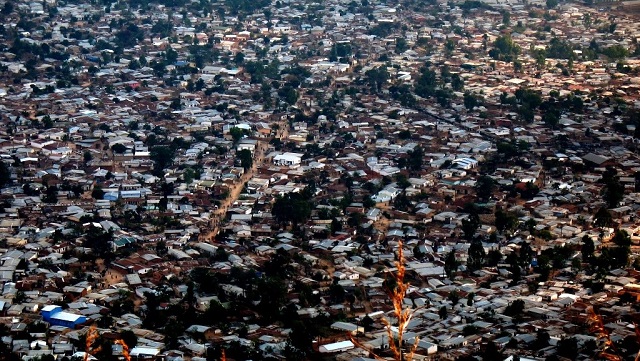
Overlooking Ndirande, suburb of Blantyre. High density, little running water or electricity.
We “attended” Leaside Presbyterian Church via the internet yesterday and today we listened to a Knox Presbyterian – Woodstock service from a couple of weeks ago. So, we can still worship together. In Malawi, they were limiting the number of people who could congregate for any reason, including church services. It will be hard for them to broadcast entire services over the internet, much like we were a few years ago. In Malawi, they are depending a lot on their faith in the face of the virus which is likely to overwhelm their health care system after the first few serious cases. Let’s keep Malawi in our prayers.
Yes, we are no longer in Malawi. After a day in the air, we dropped out of the sky to Pearson Int’l Airport. We were the only plane landing around then. I’m not sure what the daily schedule is, but it was our planeload that made its way through the airport to be hassled by immigration and then find our baggage. I guess the immigration staff weren’t so bad, but after sitting on a plane for all that time, you just want to get somewhere comfortable!!!
If we have the C19 virus, it’ll be because of the time we spent in crowds between Blantyre and Toronto. We left Blantyre with a couple of dust masks we bought at an retail agriculture supply store. When I went to put mine on at the airport, I realised it was too small and I threw it away. We tolerated the possibility of getting sick. About a quarter of the travellers were without masks, like us. One woman who sat near us sanitised her seat and personal space on the plane with wipes ever couple of hours and applied gel every hour, it seemed.
We are actually very comfortable in Toronto now. Nora is cold and wearing her hoodie in the apartment. I’m wearing shorts and my new T-shirt from Malawi. The Presbyterian church office is taking good care of us, no need to worry. Although in theory we don’t have provincial health coverage because we were away, I guess Ontario will still take care of us. I called Service Ontario and they won’t help reinstate our coverage over the phone because of privacy laws – what an excuse. Likewise with email. That’s bad enough, but we also are in quarantine and if we were more free to move around, they don’t want anyone to go the Service Ontario offices because of the epidemic / pandemic. I think we’ll watch the movie Catch 22 tonight.
Or maybe before, we have Netflix at the apartment. Last night we watched a 50s Noir movie on Youtube because we couldn’t find anything we liked on Netflix. Netflix will never catch on. They think I want to watch a cartoon called Boss Baby. I found an episode of Mr Ed on Youtube that we might watch today.
We have a pot of chili on the stove. We’d invite you over, but the door is locked and barred from anyone coming or going. I am trying to figure out how to get a pizza delivered from Pizza Hut without going to the door to let the delivery guy in. Maybe he can slide it under the door.
Malawi was sorry to see us go. We said goodbye to our largest class, the Form 1s and to our guard, “Prince”, and the head master. Also to the synod’s general secretary and others. Even the immigration official at the airport expressed sadness at our going and encouraged us to return. Here’s a link to a description of some of the work we do. It’s a Sunday drive to church, not reflecting the actual traffic.
Oh, and I found Catch 22 on Youtube, but not on Netflix. There’s also a TV show by the same name, but I don’t see it on Youtube. Maybe I’ll get the DVDs.

 In the Warm Heart of Africa